


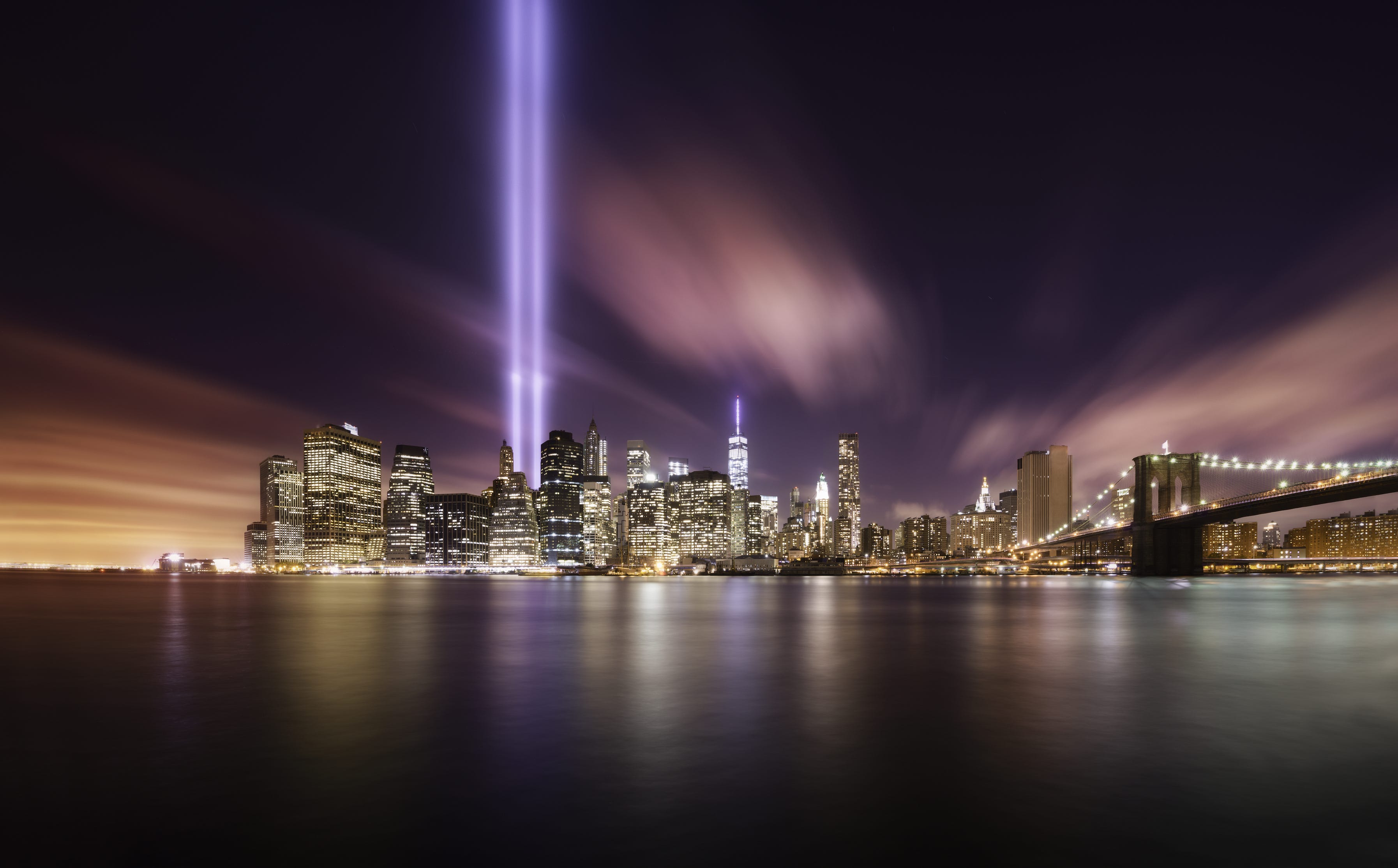
I. On this solemn day of mourning and honoring those who died on September 11, 2001, people of a certain age will remember exactly where they were when terrorists attacked New York City and other East Coast targets, killing 3,000 people and taking the Twin Towers down.
I was at a hotel in Chicago, nearing the end of a four-day lecture tour. Finishing breakfast, and looking forward to a day of rest before my last talk that evening, I saw people turning toward a muted TV on the dining room wall. As the scrolling CNN headlines described what was happening in Manhattan, I went back to my room, where I spent an anguished morning watching TV. Desperate for people to talk with, I called family and friends.
After lunch, I called the church where I was to speak that evening, thinking they might cancel the event. But no, they planned to proceed. “Good,” I thought. “We need to gather to start grieving those who died, reflect on the world we live in and our role in it, and ask how we might respond to this moment in a way that brings life, not more death.”
As it turned out, that was the last thing anyone in this affluent suburb wanted to talk about. The people I was with on 9/11 acted as if what happened that morning, though sad and shocking, was an issue for the military to deal with, one only marginally related to their daily lives. As is so often the case in the U.S., no matter what happens—e.g., school shootings—we want to get back to business as usual ASAP, not asking what happened and why and what we might do about it.
II. Looking back, I recognize all of this as an early clue to the state of denial that continues to keep Americans from understanding the full reality of who we are as a nation. In the quarter-century since the horrors of 9/11, denialism has metastasized in our body politic, contributing to the way MAGA lies now have our democracy on the ropes. When denial is on the rise, democracy begins to die.
Denial is well-known among those who study addictions and family systems. It’s a way for individuals and groups to avoid facing painful realities about themselves and taking responsibility for them. Exhibit A: Everyone in the family knows that Dad drinks too much, and they worry silently about the implications for him and others. But no one is willing to talk about it. “Sure, Dad likes his cocktails,” they say to themselves, “but he’s not an alcoholic. That kind of thing doesn’t happen in this family.” So the family closes ranks, explaining Dad’s behavior away to protect their myth of who they are.
Americans have long clung to a “family myth” about this nation. The U.S.A. is a “light to the world and a city set on a hill,” a nation especially blessed by God, one that has made a few mistakes but done far more good than harm. In the wake of 9/11, we felt no need to look inward and ask, “What might we learn from this attack on our homeland about becoming better citizens of the world we share with others?” Denial kicked in immediately to protect our family myth. Over the past twenty-five years, our role in the world has become more toxic than ever.
III. On September 20, 2001, President George W. Bush addressed Congress, using a line that might have helped us do some introspection and set a different course for the 21st Century: “Americans are asking, why do they hate us?”
Unfortunately, he jumped to an answer that comes straight from The Denial Playbook: “They hate our freedoms—our freedom of religion, our freedom of speech, our freedom to vote and assemble and disagree with each other.” In other words, “We are so noble, so pure that others get jealous to the point of wanting to kill us. 9/11 has nothing to do with what’s wrong with us. It’s all about what’s wrong with them.”
A few days later, the writer Susan Sontag took a different tack on Bush’s question. Thinking about the way the U.S., with its insatiable demand for oil, has ridden roughshod over so many lives and hopes in the Middle East—as we are still doing today—she wrote: “Where is the acknowledgment that this was … an attack on the world’s self-proclaimed superpower, undertaken as a consequence of specific American alliances and actions?”
Sontag did not argue that we were to blame for the attack. She asked us to remove the blinders that come with our family myth and view 9/11 in the round, seeing ourselves as others see us. Predictably, she was assailed by many as a traitor to the American family, rather than a voice in the wilderness raising a call to self-reflection.
IV. The denial that followed 9/11, and our hostility toward prophets like Sontag, led to more denial and projection—witness our wars against Afghanistan and Iraq, a nation that had no involvement in 9/11—and even louder claims of American exceptionalism. The result was a Petri dish of denialism in which MAGA lies could multiply and flourish.
In December of 2016, a MAGA spokesperson named Scottie Nell Hughes was asked why there were no facts to back up our newly elected POTUS’s claim of “massive election fraud”—a claim he and his enablers make to this day, still without factual support. Her answer was the most brazen denial imaginable, one that gave MAGA the cover it needed to promote an agenda built on resentment, not facts: “There is no such thing as facts any more.”
For a decade, MAGA has been mass-producing fact-free claims to win the day. In the Gospel according to MAGA, most Muslim immigrants are terrorists, most Mexican immigrants are criminals, science is “woke,” climate change is a hoax, universities are hotbeds of sedition, the majority of journalists lie, vaccines kill, historians make too much of this nation’s wrongs, courts have been weaponized against conservatives, the Constitution doesn’t mean what it says, what we’re doing in Iran is not a war, and claims about the rising cost of living are Communist propaganda. None of this is backed by facts, but facts are so yesterday.
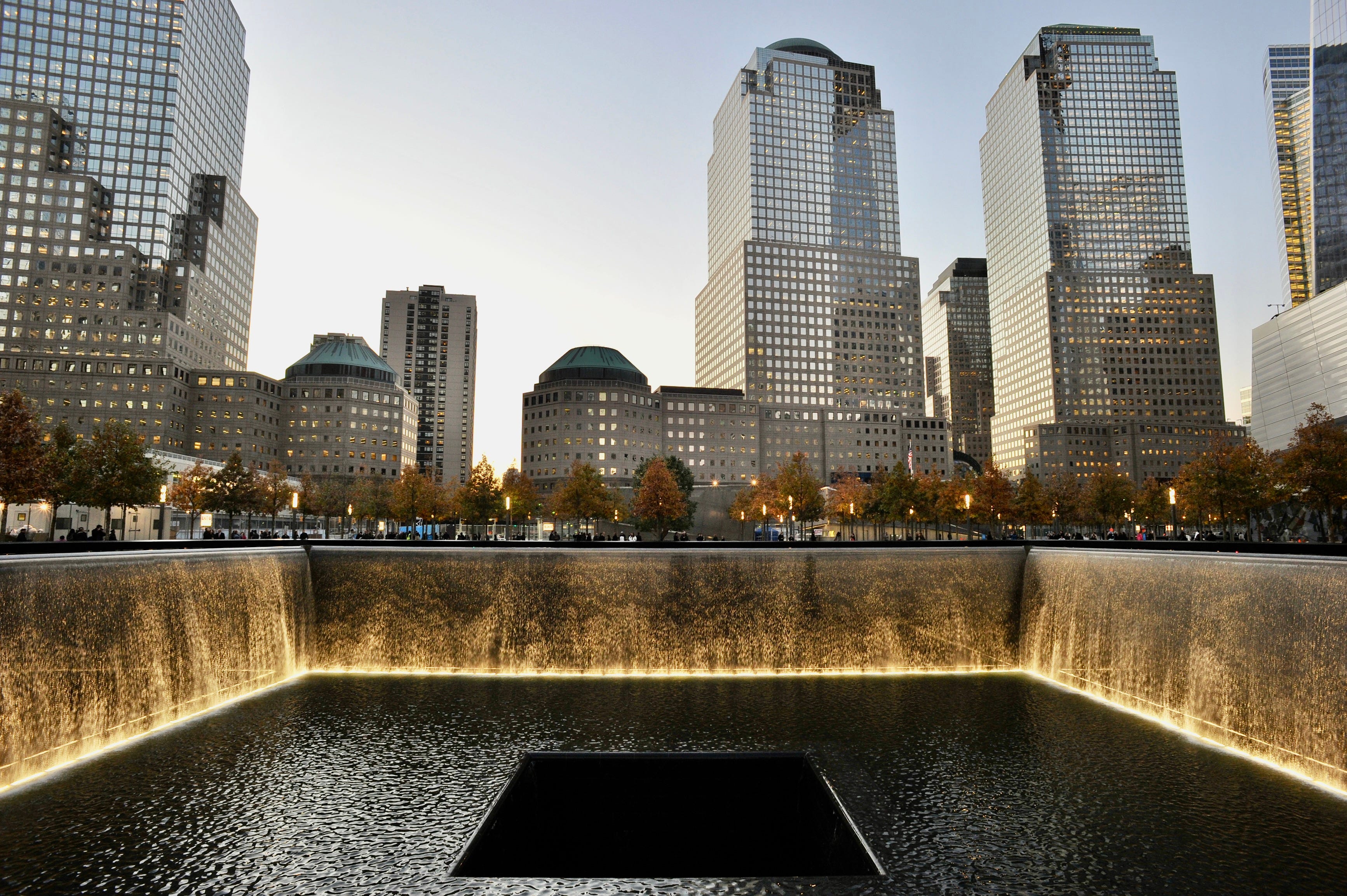
V. Is there a way out of this deadly culture of denial? Have we reached a point where life in “the family” has become so hellish that a critical mass of members feel compelled to abandon their myth and face into reality? Today, as we head toward the midterms, that feels like a possibility to me. But as we prepare for the general election of 2028, much depends on how we who aren’t caught up in MAGA denialism relate to those who do.
There was a time when therapists thought that an “intervention” aimed at forcing the family and the addict to face their pathology was the best way forward. That’s no longer the case. Today, therapists focus on the feelings of ambivalence that can almost always be found among addicts and their enablers. Even among the most ardent supporters of the family myth, there is usually a seed of doubt about what they are doing, a seed that can grow into a force that cracks open the myth from within if it is tended with care and respect.
To put this in political terms, hurling accusations at those who use denial to rationalize their political choices does not change hearts or minds, as research has clearly shown. The way beyond the denialism that is bringing us down is the kind of open, honest, yet generous public conversation on which democracy has always depended, and it’s up to us who are not in denial to start the conversation. Someone has to wage peace.
VI. Democracy cannot thrive in a culture of denial. If we can’t free ourselves from the lies that allow MAGA to continue to bring democracy down, it’s no stretch to say that Osama Bin Laden has won the victory he sought on 9/11. That story is still being written, and its next chapter is in our hands.
Memo to Self: With the 2028 election in view, reach out to people who once supported MAGA but are increasingly ambivalent about it. Approach them with questions, not proclamations, asking openly and honestly how they think things are going: e.g., are they and the country better off today because of MAGA’s dominance? Listen carefully, ask more open questions, and build on what they say in ways that might make for common cause. Do your best to follow the advice of W.H. Auden in his poem on the outbreak of WWII: “All I have is a voice / To undo the folded lie … / We must love one another or die.”
[NOTES: My 10 books are available wherever you get your books, including HERE and HERE. The Center for Courage & Renewal is HERE. I post on Substack every Friday, as time and energy allow. Free as well as paid subscriptions will always have access to everything I post.]
As I write, the Jewish New Year (Rosh Hashanah) is about to begin for us in the UK (at sunset). You guys are already embarked on the first of the 'High Holy Days', probably without knowing it. Rosh Hashanah is a time for reflection, repentance and changing our ways. Here is my poem, which echoes some of what PJP is saying and acknowledges that we are all complicit. May you enjoy some sweetness in the coming year.
Rosh Hashanah: Turning
As far south as Israel, now is the time of year
when leaves are turning. Olives and grain
are siloed, and our hemisphere
begins its elliptic voyage from the sun.
The Jews have set aside these darker days
for teshuvah - the bending of our gaze
inward and rearward. To move ahead
the only way is back. We must confront
the mess we left on land, the wrong we did.
To be forgiven, we must first repent.
Below deck, something shifts its viscid weight,
burdens the sea, drags us out of true.
We tanker-navigators of the North
prefer to forge straight lines, forget
that we must follow the curve of earth.
Unwilling to change course, we argue
such manoeuvres are too costly, and too late.
Soon we will admit we are askew.
Soon we will stand and watch as our disgrace
pumps by the tonne across the water's face.
It may be so; it may already be too late
to go about - beneath our keel the lane
is narrowing like the light. And yet
the earth renews its circle round the sun,
and Rosh Hashanah comes unfailingly
as days begin to dwindle. A New Year :
another chance to choose a better way,
repair the ravaged land, reclaim old error,
change breaches to bridges on that holy Day
of Atonement when neighbour joins with neighbour.
Stevie Krayer
On behalf of the 13 year old who, on the morning of her first week of HS in suburban Chicago, watched as the adults in the room carry on as usual, ushering everyone outside for gym class before we knew what was happening, just looking to the sky in fear of the unknown... and hearing the words "they hate us for our freedom", as we were suddenly all expected to start reciting the pledge of allegiance as we stood at our desks, hands on hearts, lest we risk detention, wondering if any adult could see, as I did so clearly, the lunacy, the gaslighting we were all expected to swallow. Thank you, Parker, for being the voice I've always needed, and one I wish I'd known then. I'm so grateful I found you, a decade after this moment and more than a decade ago now.